The Fan Army Behind the Curtain: Inside the DIY Voting Operations Running Your Favorite Contests

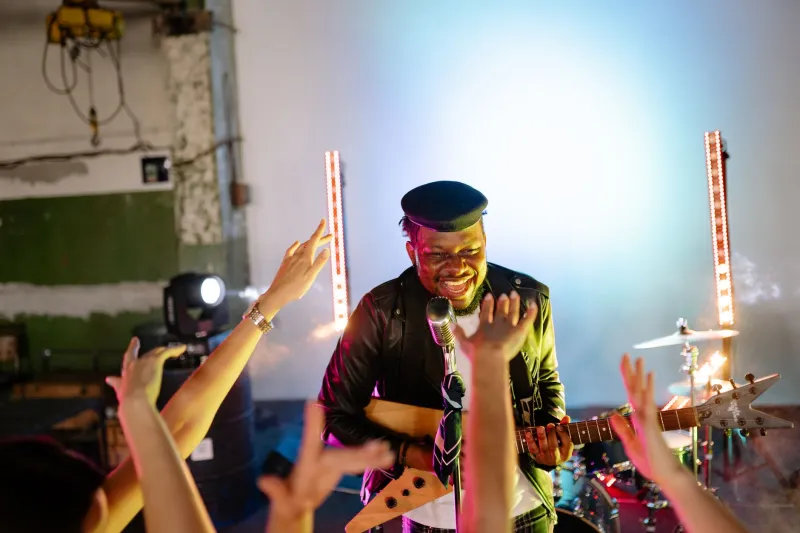
Photo by Photo by Omar Ramadan on Unsplash on Unsplash
On the surface, it looks like a regular TikTok comment section. Fans hyping up their favorite singer. A few heart emojis. Some friendly trash talk between competing fanbases. But scroll past the noise and you'll start noticing something different — pinned comments with step-by-step voting guides, links to private Discord servers, and phrases like "spreadsheet updated, check the doc" that don't make any sense unless you're already in the loop.
You're not just looking at fans. You're looking at the edge of something that functions more like a campaign operation.
Welcome to the New Fan Ecosystem
The days of simply rooting for someone are over — at least for a particular breed of dedicated supporter. Across the American online competition landscape, a growing number of fans have stopped being passive spectators and started acting like volunteer political operatives. They build infrastructure. They assign roles. They track data. And they do it all for free, out of pure love for a contestant.
This phenomenon has exploded in the last few years, fueled by the intersection of accessible digital tools and deeply invested fan communities. What used to require a budget and a team can now be replicated by a 22-year-old in Columbus with a Discord account and a Google Sheets subscription.
"I started the server because I was frustrated watching my favorite sit in fourth place when I knew her support was there," explained one organizer who runs a voting coordination community for a regional talent competition. "The votes existed. They just weren't organized. So I decided to organize them."
That's a sentence that could have come out of a political campaign headquarters — and the parallel is more than just rhetorical.
The Anatomy of a Fan-Run Voting Operation
So what does one of these DIY campaign machines actually look like from the inside?
At the core is usually a private or semi-private Discord server. These aren't just hangout spaces — they're structured with channels that have specific purposes. There's typically a dedicated voting-updates room where admins post real-time leaderboard screenshots. There's a resources channel with links, voting instructions, and screenshots of exactly how to cast a ballot on whatever platform is hosting the competition. There's often a "daily check-in" channel where members confirm they've voted that day.
Beyond Discord, TikTok has become one of the most powerful recruitment and instruction tools these operations use. A single well-made TikTok walking viewers through the voting process — complete with screen recordings and a trending audio track underneath — can bring hundreds of new voters into the fold in a single afternoon. The best ones are genuinely impressive content: clear, fast-paced, and weirdly fun to watch even if you have no stake in the contest.
And then there are the spreadsheets. Oh, the spreadsheets. Serious fan operations maintain living documents that track vote counts across platforms, note which fan accounts have the largest reach, log which influencers have been contacted about amplification, and sometimes even map out a day-by-day campaign calendar leading up to the final vote window. It's the kind of document you'd expect from a mid-size nonprofit running a fundraising drive, not a group of fans rallying behind a contestant in a singing competition.
Why Do People Do This?
The obvious question is: why? Why invest this much time and energy into something you have no professional stake in?
The motivations are genuinely varied. For some, it's a sense of community. These operations don't just serve the contestant — they give fans a place to belong, a shared mission, and a social circle built around something they care about. In an era where a lot of people feel disconnected, being part of a coordinated fan community scratches a real itch.
For others, it's about fairness. Many of the most passionate organizers will tell you they got involved because they felt like a contestant with genuine talent was being overlooked, and the voting system wasn't reflecting that. "She was clearly the best performer," said one fan organizer from Atlanta who helped coordinate a successful late-surge campaign. "But the other fanbase just had better coordination. I wanted to level the playing field."
And for a subset of organizers, there's also a skills element. Running a fan campaign teaches real things: community management, content creation, data tracking, social media strategy. More than a few people have parlayed fan-organizing experience into actual marketing or communications careers. The skills transfer more than you'd think.
How Platforms Are Responding
All of this grassroots energy creates an interesting dynamic for competition platforms. On one hand, highly engaged fan communities are exactly what makes online contests exciting. The drama, the momentum swings, the passionate investment — that's the whole point. Platforms like VoteStar Live thrive when fans are genuinely fired up.
On the other hand, highly coordinated voting operations can create imbalances that feel unfair to contestants whose fanbases are less organized, even if those contestants are equally talented. It's a tension that doesn't have an easy resolution.
The smartest platforms have responded by leaning into transparency — making vote counts publicly visible in real time so everyone can see where things stand and respond accordingly. Others have introduced features that reward consistent engagement over pure vote volume, which tends to level the playing field between organized campaigns and more casual fan bases.
The conversation about what "fair" looks like in fan-driven competitions is still very much ongoing, and honestly, it's one of the more interesting debates in the online entertainment space right now.
The Culture Shift Is Already Here
What's clear is that the relationship between fans and competitions has fundamentally changed. The old model — broadcast a contest, let people vote, tally the results — is giving way to something messier, more decentralized, and arguably more alive. Fans aren't just participants in the competition. In a lot of ways, they are the competition.
The contestants who understand this — and whose communities understand this — are the ones who tend to win. Not always because they're the most talented, but because they've inspired the kind of loyalty that makes someone build a spreadsheet at midnight on a Tuesday just to help them succeed.
Next time you see a leaderboard flip that doesn't make sense, look for the Discord link. There's a whole operation behind it that you probably never knew existed.