Tick Tock, Cast Your Vote: The Science Behind Those Wild Final-Hour Surges in Online Competitions
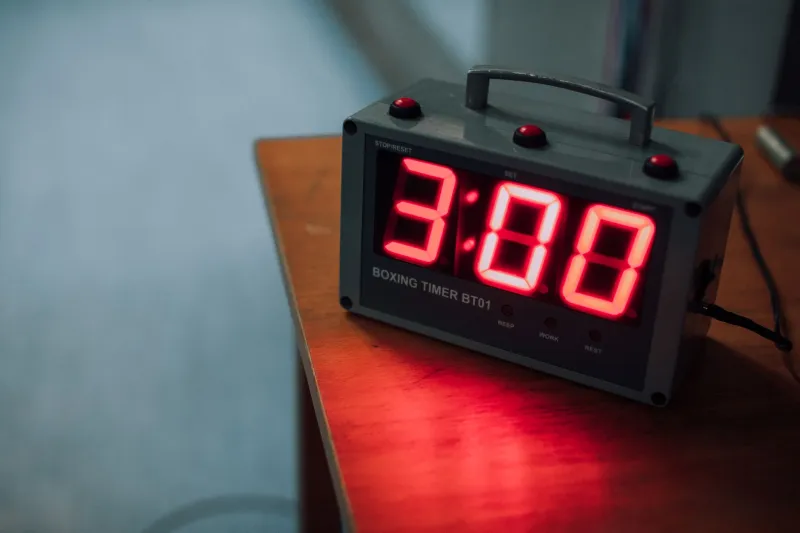
If you've ever watched a VoteStar Live leaderboard in the final stretch of a competition, you already know the feeling. Numbers that barely budged for days suddenly start climbing like a fever chart. Fans who've been quietly lurking transform into full-blown evangelists. And somehow, a contestant who looked like a long shot at noon is leading by midnight. What's going on here?
Spoiler: it's not random. The last-minute voting surge is one of the most consistent, well-documented patterns in online competition culture — and the psychology behind it is genuinely fascinating.
The Deadline Effect Is Real, and It's Powerful
Researchers who study human decision-making have long known that deadlines don't just motivate people — they fundamentally change the way people behave. Psychologists call it "deadline urgency," and it's the same force that makes you suddenly sprint through a grocery store at 8:55 PM when it closes at 9. When the end of something feels abstract and far away, most of us treat it that way. We'll vote "later." We'll share the link "tomorrow."
But once that clock starts feeling real? Everything shifts.
In the context of online voting platforms, this plays out in a pretty predictable rhythm. Early in a contest window — whether it's a week-long poll or a month-long bracket — participation tends to be light and scattered. Hardcore fans show up immediately, but casual supporters drift. Then, as the final 24 to 48 hours approach, something clicks. The competition suddenly feels finite, and people who've been meaning to vote finally do.
Contest organizers have noticed this pattern for years. "The last day almost always accounts for a disproportionate share of total votes," said one competition coordinator who has managed multiple large-scale online talent contests. "It doesn't matter how long the voting window is. Whether it's five days or thirty, the final stretch is where the real battle happens."
Loss Aversion: Voting Because You're Scared of Losing
Here's where it gets interesting. A big chunk of that final-day surge isn't just procrastinators finally getting around to it. A significant portion is driven by what behavioral economists call loss aversion — the psychological reality that people are more motivated by the fear of losing something than by the prospect of gaining it.
As a contest nears its end, fans don't just think about how great it would be if their favorite won. They start viscerally imagining how awful it would feel if their favorite lost. That emotional shift is a powerful accelerant. It converts passive supporters into active campaigners almost overnight.
You've probably seen this in action on social media. The tone changes in the final hours. Posts stop being celebratory hype and start sounding a little desperate — "We NEED every vote right now, please don't let this happen" energy hits different than "come support my fave!" That urgency is real, and it's contagious.
The Bandwagon Problem (and Opportunity)
There's another psychological wrinkle worth understanding: social proof. People are wired to follow crowds. When a contestant is visibly surging, new voters are more likely to jump on board because the momentum itself signals that this is the person worth supporting.
This creates a fascinating feedback loop in the final hours of a competition. A surge attracts attention. Attention brings more votes. More votes fuel more social media chatter. More chatter brings even more votes. For a contestant who manages to ignite that cycle at the right moment, the results can be staggering.
The flip side? If a contestant is visibly stalling while a competitor surges, their own base can get demoralized — and some fence-sitters will peel away toward the leader. Momentum is everything, which is why when you mobilize your fanbase matters just as much as how you mobilize them.
Strategic Timing: What the Smart Campaigns Actually Do
So what does all of this mean practically? If you're helping organize a voting campaign for someone you're rooting for, the behavioral science points toward a few clear strategies.
Hold something back. Don't burn every resource in the first week. Save your biggest influencer shoutouts, your most emotionally compelling content, and your most active community members for the final push. A well-timed surge in the last 12 hours is worth more than steady drip voting spread across a month.
Create urgency early in the final day. Don't wait until midnight to start rallying. Kick off your final-24-hour campaign in the morning so you have time to build momentum throughout the day. By the time the real crunch hits, you want your community already activated and sharing.
Use countdowns intentionally. Posting "48 hours left" is okay. Posting "we are 312 votes behind with 6 hours left — here's the link" is a weapon. Specificity makes the threat feel real, and real threats move people.
Lean into the emotional stakes. Don't just tell people to vote. Remind them what it would mean to the contestant. Remind them why they fell in love with this person's talent in the first place. Emotional resonance is what converts a casual fan into someone who actually opens a new tab and casts a ballot.
The Other Side of the Surge
It's worth acknowledging that not every last-minute surge is a grassroots phenomenon. Some are engineered — coordinated voting drives, purchased vote packages, or organized fan networks that deliberately time their activity. Platforms like VoteStar Live work to keep competitions fair and transparent, but the surge pattern itself is neutral. It can be the result of genuine organic excitement or calculated strategy.
What's undeniable is that understanding why surges happen gives both contestants and fans a real edge. The psychology isn't complicated once you see it clearly: people wait, fear kicks in, crowds form, and momentum takes over. That's the engine behind almost every dramatic leaderboard flip you've ever witnessed.
Next time you're watching the final hours of a competition tick down, pay attention to the numbers — and to your own feelings. Chances are, that little knot of anxiety you feel when your favorite is trailing? That's exactly what the science predicts. And it's exactly what the best campaigns are counting on.